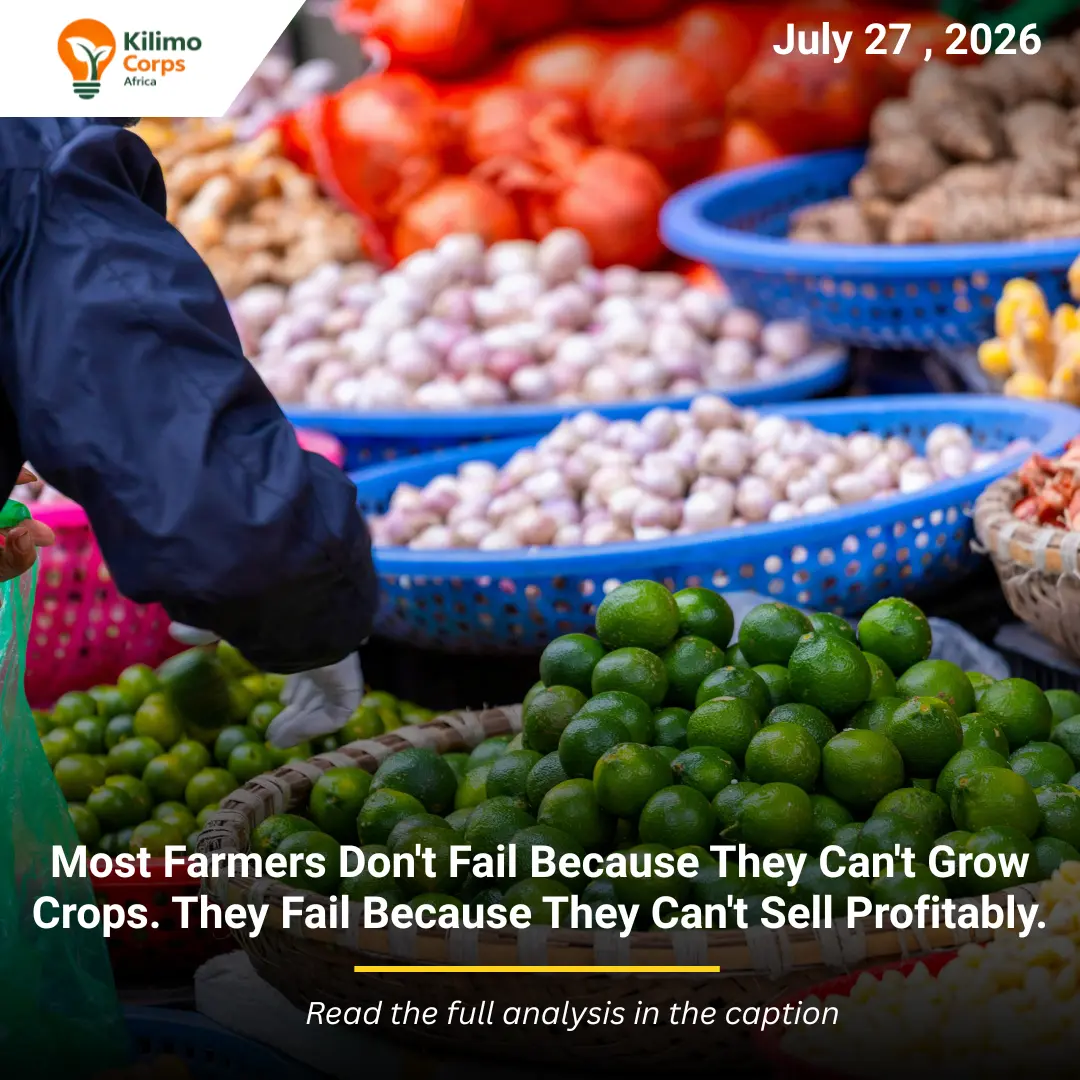
A farmer can achieve high yields and still lose money.
This may sound contradictory, but it is one of the most important realities in modern agriculture.
Agricultural training has traditionally concentrated on production: land preparation, seed selection, fertiliser application, pest control and harvesting.
These skills matter.
However, a farm is not only a biological system. It is also a business operating within volatile markets.
Profit depends on what is produced, how much it costs to produce, when it reaches the market, who buys it, what price is negotiated and how efficiently the enterprise manages cash.
The missing market question
Too many agricultural enterprises begin with the question: “What can I grow?”
The more important question is often: “Who will buy it, at what price, and under what conditions?”
Producing without a clear market strategy exposes farmers to oversupply, price manipulation and costly delays.
A crop may be technically suitable for a region but commercially unsuitable for the farmer’s target market.
Market research should therefore come before planting, not after harvesting.
Yield is not the same as profit
Consider two farmers growing the same crop.
Farmer A produces a higher yield but purchases expensive inputs, hires costly transport, loses part of the harvest and sells during a period of oversupply.
Farmer B produces slightly less but has a confirmed buyer, maintains accurate records, controls costs, grades the produce and delivers at an agreed price.
Farmer B may earn more despite producing less.
This illustrates why yield alone is an incomplete measure of agricultural success.
Every agripreneur should understand:
- Cost of production per unit
- Break-even price
- Gross margin
- Cash flow
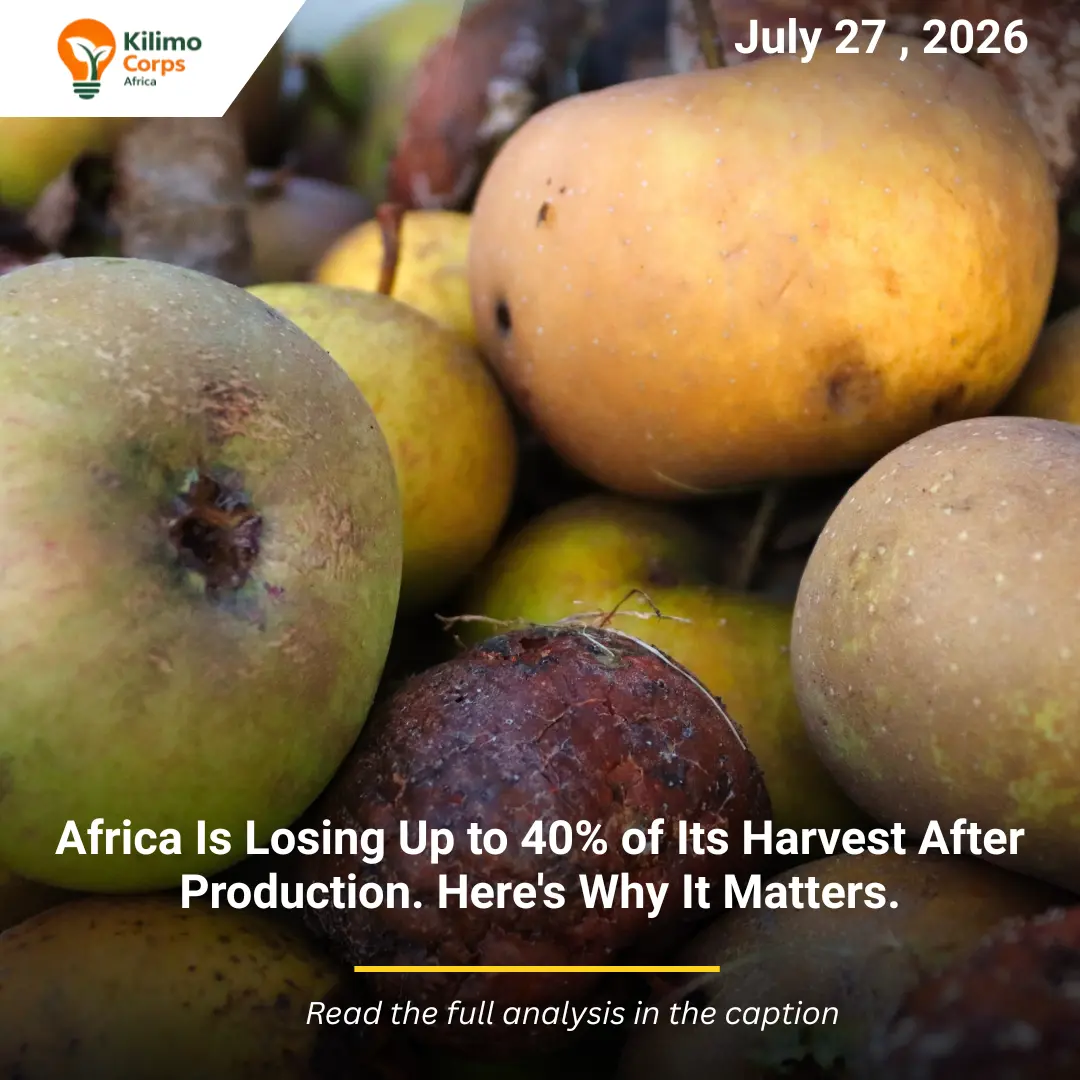
- Post-harvest losses
- Market seasonality
- Buyer requirements
- Transport and packaging costs
Agriculture needs stronger commercial education
Financial literacy and market development should be central components of agricultural education.
Farmers need the ability to prepare budgets, compare investment options, separate household money from business money and assess whether an enterprise is genuinely profitable.
Many enterprises collapse not because demand is absent, but because cash is poorly managed.
A farm may own land, livestock and equipment yet still fail to meet immediate expenses because its cash is tied up in slow-moving stock or unpaid buyer invoices.
Market access requires organisation
Individual smallholders often negotiate from a weak position. They may lack volume, transport and reliable quality standards.
Farmer organisations, cooperatives and producer companies can help members aggregate produce, negotiate contracts, access storage and meet institutional buyer requirements.
However, collective organisations must also be professionally managed. Poor governance, weak accountability and delayed payments can destroy trust.
Aggregation works best when supported by transparent records, clear quality standards and enforceable commercial agreements.
Digital platforms are useful, but not sufficient
Mobile phones and digital marketplaces have improved access to information, but farmers should not assume that every online buyer is credible.
Digital tools must be combined with due diligence, physical verification, contracts and clear payment terms.
Technology can improve the market, but it cannot replace sound commercial judgement.
Kilimo Corps Africa perspective
The future agripreneur must be able to move confidently between the farm, the marketplace and the boardroom.
Technical production skills must be matched by financial literacy, branding, negotiation, customer understanding and strategic planning.
African agriculture will become more profitable when agricultural education stops treating business management as an optional topic.
Growing the crop is only half the work. Selling it profitably completes the enterprise.
References
- International Labour Organization and IFAD. ProAgro YOUTH agribusiness employment initiative
- Kilimo Corps Africa. Enterprise Development Framework
- Kilimo Corps Africa. Editorial analysis, July 2026