African agriculture is often judged by how much food farmers produce.
Governments announce fertiliser programmes, distribute seed, promote irrigation and celebrate bumper harvests. Yet one of the continent’s most costly agricultural failures begins after the crop has already been harvested.
Food is lost in fields, damaged during transport, spoiled in informal storage, rejected by buyers or left unsold in overcrowded markets.
The result is a painful contradiction: farmers lose income while consumers continue to face high food prices.
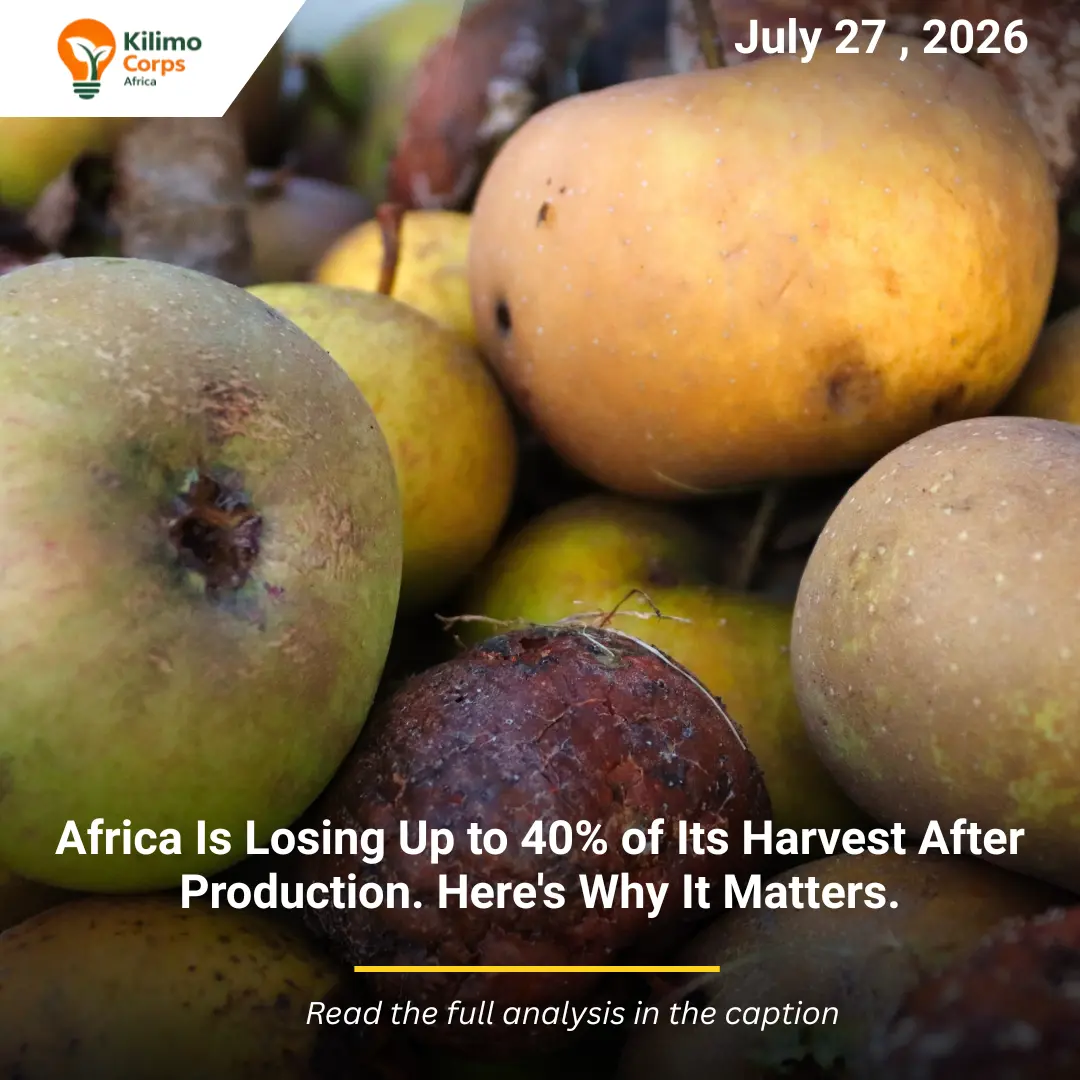
Recent figures from the Food and Agriculture Organization show that sub-Saharan Africa had the world’s highest regional food-loss rate in 2023, at approximately 23 percent. Globally, an estimated 13.3 percent of food was lost between harvest and retail during the same year. Fruits and vegetables were the most affected commodity group, with losses estimated at 25.4 percent worldwide.
Older FAO assessments have shown that losses in African value chains can reach about 20 percent for cereals, 30 percent for dairy and fish, and as much as 40 percent for fruits and vegetables in some circumstances. These losses are associated with inadequate infrastructure, poor handling, weak market access, limited financing and insufficient post-harvest technology.
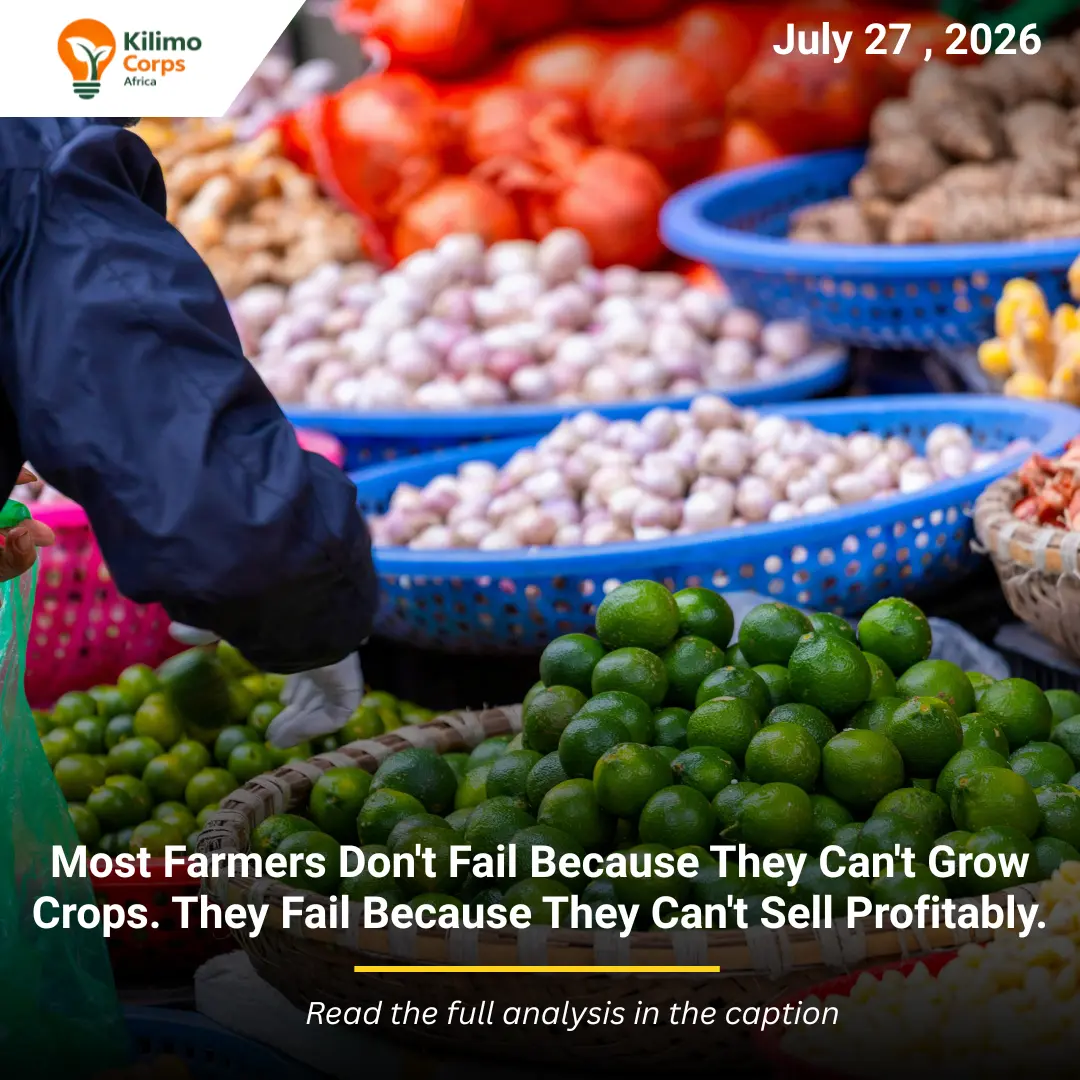
A production success can become a market failure
Consider a tomato farmer who achieves an excellent harvest.
Without appropriate crates, the tomatoes may be packed into sacks and damaged during transportation. Without cold storage, the farmer has only a short period in which to sell. If many farmers harvest simultaneously, traders may offer prices below the cost of production.
The farmer may have succeeded agronomically but failed commercially.
This is why agricultural transformation cannot be measured by production statistics alone.
A resilient food system must also be able to preserve, aggregate, transport, process and market what farmers produce.
The infrastructure gap
Post-harvest loss is not merely a farmer behaviour problem. It is an infrastructure and systems problem.
Many farming communities lack accessible cold rooms, pack houses, drying equipment, refrigerated transport, warehouses and reliable rural roads. Small-scale producers may also lack affordable financing to acquire basic technologies such as hermetic storage bags, moisture meters, solar dryers and plastic crates.
Market information is another major weakness.
Farmers often plant without reliable information on future demand. When too many producers supply the same commodity at the same time, prices collapse and losses rise.
Better coordination between producers, aggregators, processors, retailers and institutional buyers could reduce this imbalance.
Processing must move closer to production
Africa’s post-harvest challenge is also a missed industrial opportunity.
Tomatoes can become paste or sauce. Milk can become yoghurt and cheese. Mangoes can be dried or processed into juice. Maize can be milled, fortified, packaged and branded.
When processing takes place near production zones, food lasts longer, farmers gain more reliable markets and rural communities retain more economic value.
County governments and private investors should therefore treat agro-processing infrastructure as part of food-security policy, not merely industrial policy.
What should change?
Reducing food losses requires coordinated investment in:
- Rural storage and cold-chain infrastructure
- Better harvesting and handling practices
- Affordable processing equipment
- Farmer aggregation and cooperative systems
- Reliable market information
- Structured contracts with buyers
- Improved roads and transport logistics
- Practical post-harvest training
Kilimo Corps Africa perspective
Africa does not always need to cultivate more land to strengthen food security.
In many cases, the fastest gains will come from protecting the food already being produced.
Reducing post-harvest loss increases farmer income, improves food availability, reduces waste and lowers unnecessary pressure on land and water resources.
The future of African agriculture depends not only on bigger harvests, but on stronger systems capable of preserving their value.
References
- Food and Agriculture Organization of the United Nations. SDG Indicator 12.3.1: Global Food Losses, 2023 estimates
- Food and Agriculture Organization of the United Nations. Rockefeller Foundation, FAO supporting Africa to halve food loss
- Kilimo Corps Africa. Editorial analysis, July 2026