A farmer may spend months preparing land, purchasing fertiliser, organising labour and waiting for rain.
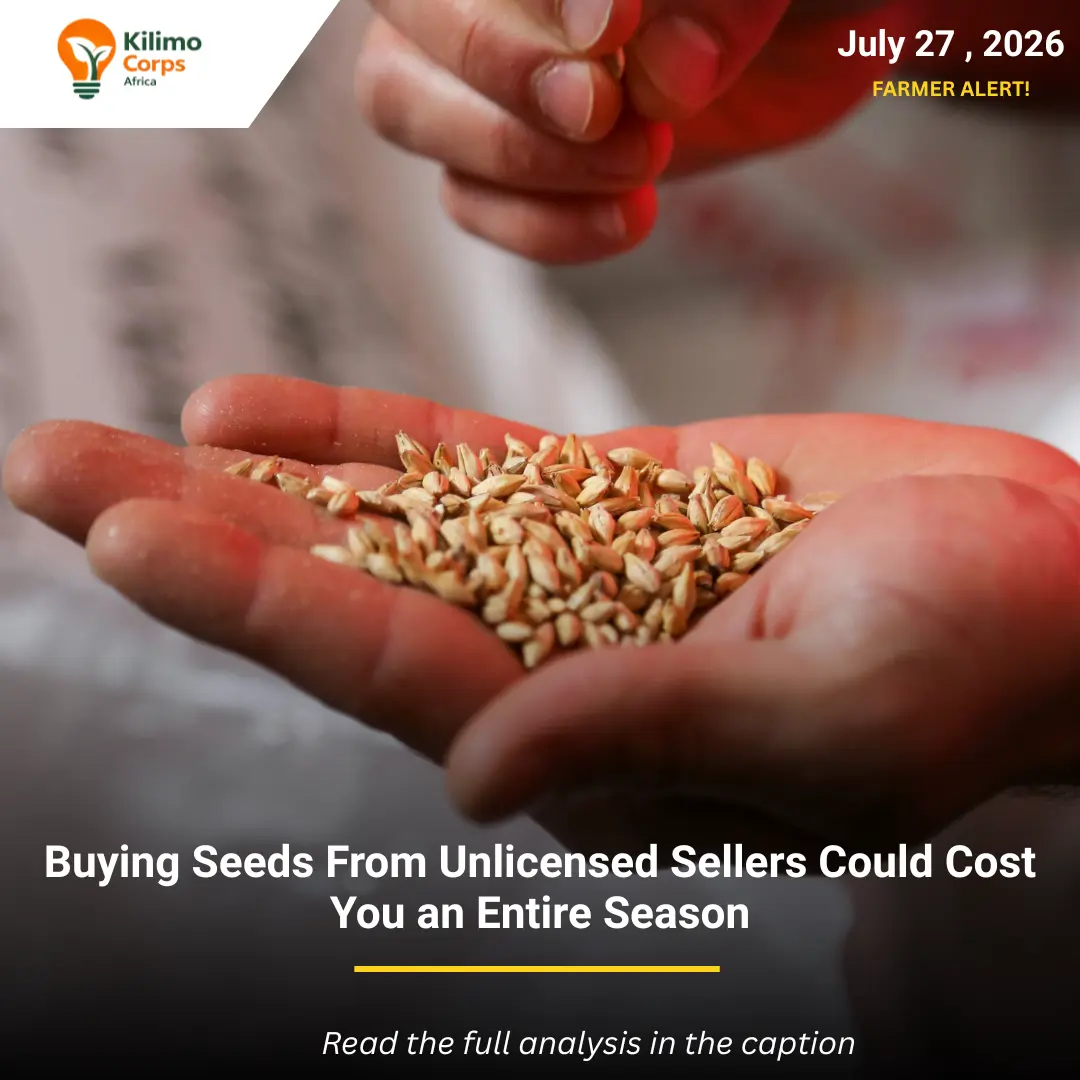
Yet the entire investment can be compromised by one decision made at the beginning of the season: buying seed from an unreliable source.
Counterfeit, adulterated or poorly stored seed remains a serious threat to farm productivity.
The danger is especially high when farmers buy loose seed, repackaged seed, damaged packets or products from sellers who cannot provide proof of authorisation.
Why seed quality matters
Certified seed is tested to confirm important characteristics such as varietal identity, purity, germination capacity and freedom from designated pests and diseases.
The Kenya Plant Health Inspectorate Service states that seed certification is intended to ensure farmers receive seed that is true to identity, has adequate purity and germination capacity, and meets prescribed quality standards.
When seed quality is poor, farmers may experience:
- Low or uneven germination
- Weak crop establishment
- Varietal contamination
- Increased vulnerability to pests and diseases
- Delayed maturity
- Reduced yield
- Complete crop failure
How counterfeit seed reaches farmers
Fraudulent seed may be sold through informal roadside vendors, unlicensed shops, social-media pages or individuals claiming to offer discounted products.
In some cases, genuine packaging is reused and filled with grain or inferior seed.
In others, seed may be genuine but damaged through poor storage, excessive heat or moisture.
A low price is therefore not always a bargain. It may be the first sign of a serious risk.
How Kenyan farmers can verify seed
KEPHIS advises farmers to purchase seed from recognised dealers or stockists who display their licences and the companies they represent.
Farmers should avoid seed weighed from opened packets and should insist on properly sealed and labelled packaging. They should also obtain an official receipt and retain the packet and labels in case a complaint must later be investigated.
KEPHIS has also promoted the use of the certification sticker on seed packages. Farmers can scratch the sticker to reveal a concealed code and send it by SMS to 1393 to verify the authenticity and details of the packaged seed. The verification service is free.
A practical farmer checklist
Before paying for seed:
- Confirm that the dealer is licensed.
- Inspect the original seal.
- Check the crop, variety, lot number and expiry information.
- Verify the certification sticker.
- Avoid loose seed from opened packets.
- Request an official receipt.
- Keep the packaging after planting.
- Report suspicious products to the relevant authorities.
Enforcement must be matched by awareness
Regulation alone cannot eliminate counterfeit seed. Farmers must know how to identify genuine products and where to report concerns.
KEPHIS has continued farmer-awareness programmes aimed at strengthening the use of certified seed and combating fake seed in the market.
Seed companies, county governments, agro-dealers and agricultural organisations should reinforce these messages before every planting season.
Kilimo Corps Africa perspective
The cost of counterfeit seed extends beyond an individual farm.
Poor seed reduces national production, weakens trust in input systems and threatens household food security.
Farmers must treat seed purchasing as an investment decision requiring verification.
One suspicious packet can cost an entire season.
References
- Kenya Plant Health Inspectorate Service. Seed Certification Services
- Kenya Plant Health Inspectorate Service. Stakeholder Meeting on Seed Quality and Certification, January 2025
- Kenya Plant Health Inspectorate Service. Enhancing Farmer Awareness on Certified Seed, March 2025